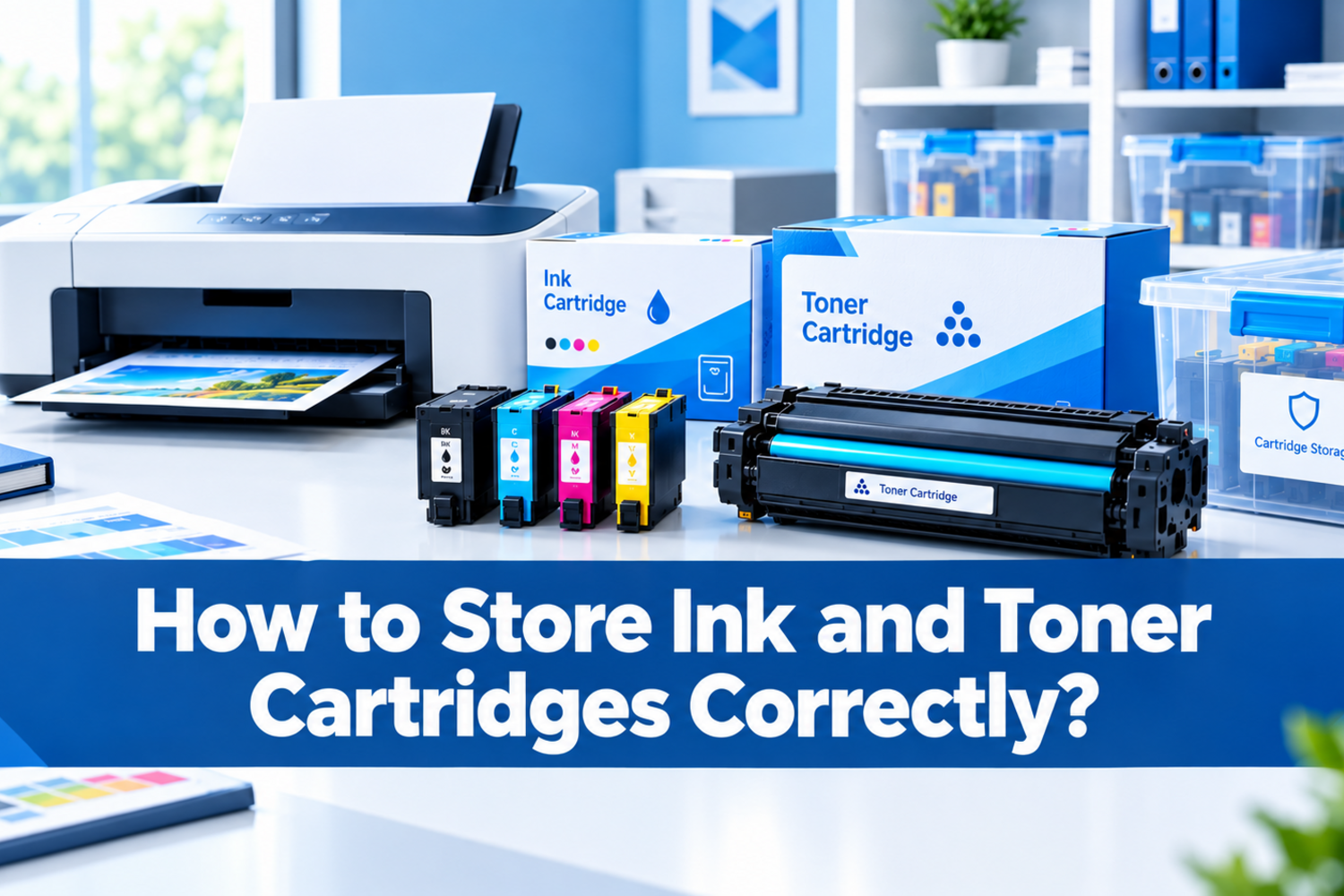
Buying extra printer cartridges can save time and money, especially when you print frequently. However, many people do not realize that how you store ink and toner cartridges can affect their performance. Incorrect storage may cause problems such as dried ink, poor print quality, toner leakage, or even a cartridge that cannot be recognized by your printer.
Whether you use original cartridges, compatible ink cartridges, or compatible toner cartridges, learning how to store ink and toner cartridges correctly can help you get better printing results and extend the life of your printer supplies.
In this guide, we will share simple and practical tips on how to store unused ink cartridges, how to store toner cartridges for long term use, and how to keep your cartridges ready whenever you need them.
Why Is Proper Ink and Toner Cartridge Storage Important?
Printer cartridges are not just simple plastic containers. Ink and toner cartridges contain materials that can change when exposed to unsuitable environments.
Ink cartridges contain liquid ink, which can dry out when exposed to air for a long time. Once the ink dries inside the nozzle, your printer may produce faded colors, missing lines, or uneven prints.
Toner cartridges work differently. They contain fine powder that is used in laser printers. Although toner does not dry like ink, moisture, heat, and improper handling can affect toner distribution and print quality.
Proper ink and toner cartridge storage helps:
- Prevent ink from drying out
- Protect toner powder quality
- Reduce printing problems
- Extend cartridge shelf life
- Avoid wasting money on unused supplies
For home users and businesses, storing cartridges correctly is an easy way to protect your printing investment.
1. Keep Cartridges Sealed Until You Need Them
The best way to store printer cartridges is to keep them in their original sealed packaging.
Many people open the cartridge box after purchase just to check the product. However, opening the package exposes the cartridge to air, dust, and moisture.
For unused ink cartridges:
- Keep the plastic bag sealed
- Do not remove protective tape
- Avoid touching the print head area
For unused toner cartridges:
- Keep the cartridge inside the original protective bag
- Avoid opening the toner seal before installation
- Keep all protective covers in place
If you are wondering how to keep ink cartridges from drying out, keeping them sealed is one of the most effective methods.
2. Choose the Right Storage Location
The storage location plays an important role in cartridge performance.
The best place to store printer cartridges is a cool, dry, and clean area with a stable temperature.
Good storage locations include:
- A desk drawer
- A home office cabinet
- A storage shelf
- A closet away from heat
Avoid storing cartridges in:
- Garages
- Cars
- Basements with high humidity
- Bathrooms
- Areas near windows with direct sunlight
Extreme temperatures can damage cartridge materials. High heat may cause ink to evaporate faster, while moisture may affect toner powder and cartridge components.
If you are searching for where to store printer cartridges at home, an indoor cabinet away from sunlight is usually the safest choice.
3. Protect Cartridges From Heat and Humidity
Temperature and humidity are two major factors that affect printer cartridge storage.
For ink cartridges, heat can speed up ink drying. Humidity changes may also affect the ink formula and cause printing issues.
For toner cartridges, moisture can cause toner powder to become uneven or stick together.
To maintain good cartridge condition:
- Avoid direct sunlight
- Keep cartridges away from heaters
- Do not store them near water sources
- Avoid places with large temperature changes
A normal indoor environment is usually suitable for long-term cartridge storage.
4. Store Ink Cartridges in the Correct Position
Many users do not know that the position of an ink cartridge during storage can make a difference.
When storing unused ink cartridges, keep them in the recommended position shown on the packaging.
In general:
- Keep cartridges upright
- Avoid placing heavy objects on top
- Avoid unnecessary shaking
Proper positioning helps keep the ink evenly distributed inside the cartridge.
This is especially important if you purchase multiple cartridges and plan to store them for several months.
Following these simple steps can help answer the common question: how to store ink cartridges without drying them out?
5. Store Toner Cartridges Carefully for Long-Term Use
Toner cartridges usually have a longer storage life compared with ink cartridges, but they still require proper care.
The best way to store toner cartridges for long term use includes:
- Keep them flat in their original packaging
- Avoid dropping or hitting the cartridge
- Protect them from moisture
- Do not place heavy items on them
Toner cartridges contain small internal parts that can be damaged by strong impact.
Before installing a toner cartridge, follow the manufacturer’s instructions. Some toner cartridges may need gentle movement to distribute toner evenly before use.
6. Avoid Buying More Cartridges Than You Need
Buying cartridges in bulk can reduce costs, but storing too many cartridges for too long may create problems.
Before purchasing extra cartridges, consider:
- How often you print
- How many pages you normally print each month
- The cartridge expiration date
- Available storage space
For example, a home user who prints only a few pages per month may not need a large supply of cartridges.
Using cartridges within a reasonable time helps maintain better print quality.
7. Check Cartridge Dates and Use Older Supplies First
If you keep several cartridges at home or in an office, organize them properly.
A simple method is:
First in, first out (FIFO).
This means:
- Use older cartridges first
- Place newer cartridges behind older ones
- Check storage dates regularly
Although properly stored cartridges can last a long time, older products may have a higher chance of performance issues.
Many users ask, “How long can printer cartridges be stored?”
The answer depends on cartridge type and storage conditions. Properly sealed and correctly stored cartridges can usually remain usable for a long period, but good storage habits are still important.
8. Handle Cartridges Carefully Before Installation
Even if cartridges are stored correctly, careful handling before installation is necessary.
Before installing:
- Wash and dry your hands
- Remove packaging carefully
- Do not touch electronic contacts or printheads
- Follow printer instructions
Incorrect handling may cause problems even with a new cartridge.
Good storage combined with proper installation can help your printer produce clear and consistent results.
Common Mistakes When Storing Printer Cartridges
Many cartridge problems come from simple storage mistakes.
Avoid these common errors:
Leaving cartridges open: Air exposure can dry ink and reduce performance.
Storing cartridges near heat sources: Heat may affect ink and toner quality.
Keeping cartridges in humid areas: Moisture can damage cartridge components.
Throwing away original packaging: The packaging provides important protection.
Ignoring storage time: Using extremely old cartridges may increase printing problems.
Final Thoughts: Protect Your Cartridges With Simple Storage Habits
Knowing how to store ink and toner cartridges correctly can help you avoid unnecessary printing problems and save money. The key is simple: keep cartridges sealed, store them in a cool and dry place, protect them from heat and moisture, and handle them carefully.
Whether you use inkjet cartridges, laser toner cartridges, OEM supplies, or compatible printer cartridges, proper storage can help maintain reliable performance.
By following these ink and toner cartridge storage tips, you can extend cartridge life and make sure your printer is always ready when you need it.